A workshop is simply a time when a group gets together to think, learn, create or solve a problem collectively. Unlike a traditional meeting, a workshop is highly participatory: everyone is involved, encouraged to engage in constructive discussion and contribute to advancing an idea or project.
Organisations are increasingly using this type of format, particularly because it stimulates creativity, facilitates decision-making and brings teams together. Whether in a company, public body, training centre or association, workshops can be adapted to any context as long as there is a common topic to explore.
1- What is the purpose of a workshop?
2- Why organise a workshop? The benefits
3- How long does a workshop last?
4- How to organise a workshop with Imagina?
5- Summary table: the workshop in a few points
6- FAQ – Everything you need to know about workshops
What is the purpose of a workshop?
A workshop aims to generate ideas and structure thinking around a specific objective. In business, it helps to:
- find solutions to an internal blockage or problem,
- set future directions,
- align teams on a project,
- co-develop a strategy,
- gather feedback from involved employees.
Participants exchange ideas, share their experiences, compare their visions... and the facilitator ensures that everyone has a chance to express themselves. This role is essential: it creates an atmosphere conducive to creativity, stimulates debate and moves the group towards a concrete result. Often, it also strengthens cohesion and team spirit, especially when a team-building dimension is added.
Training courses, conferences and professional events also use this highly interactive format, as it promotes the exchange of ideas and engages participants in a dynamic way.
Who participates in a workshop?
The audience for a workshop depends on the topic being discussed. It may be limited (a project team, a department) or broader (partners, customers, members of an organisation).
Participants are generally invited to share their views on a specific topic. The aim is to enrich the discussion through a diversity of opinions. Differences in approach are not an obstacle: on the contrary, they often reveal issues or areas for improvement that are essential to the success of a project.
Feedback is an integral part of the process: at the end of the workshop, a report or summary outlines the main ideas, decisions made or directions taken.
Why organise a workshop? The benefits
There are numerous advantages to a collaborative workshop, including:
- Strengthen teamwork: collective intelligence generates more ideas and leads to richer solutions.
- Create an open space for expression: everyone can contribute their vision, without burdensome hierarchy.
- Accelerate strategic thinking: direct discussion allows you to move forward more quickly than a series of traditional meetings.
- Stimulate creativity: workshops encourage brainstorming, prototyping ideas and innovation.
- Getting involved in a project: participants feel they are contributing to the final result.
- Improving information sharing: the workshop streamlines communication and reduces misunderstandings.
In academic and research circles, workshops are also widely used to advance collective projects, compare approaches, and share methodologies.
How long does a workshop last?
The duration varies depending on the objectives:
- short format (1.5–3 hours): ideal for quick brainstorming or pooling ideas;
- half-day: the most common format for exploring a topic in depth;
- full day: perfect for strategic thinking or work requiring several phases;
- workshop cycle: used to build a complex project or support internal change.
The workshop can be a one-off event or a recurring event, led by a member of the team or an external speaker. The important thing is to create an engaging and productive dynamic.
How to organise a workshop with Imagina?
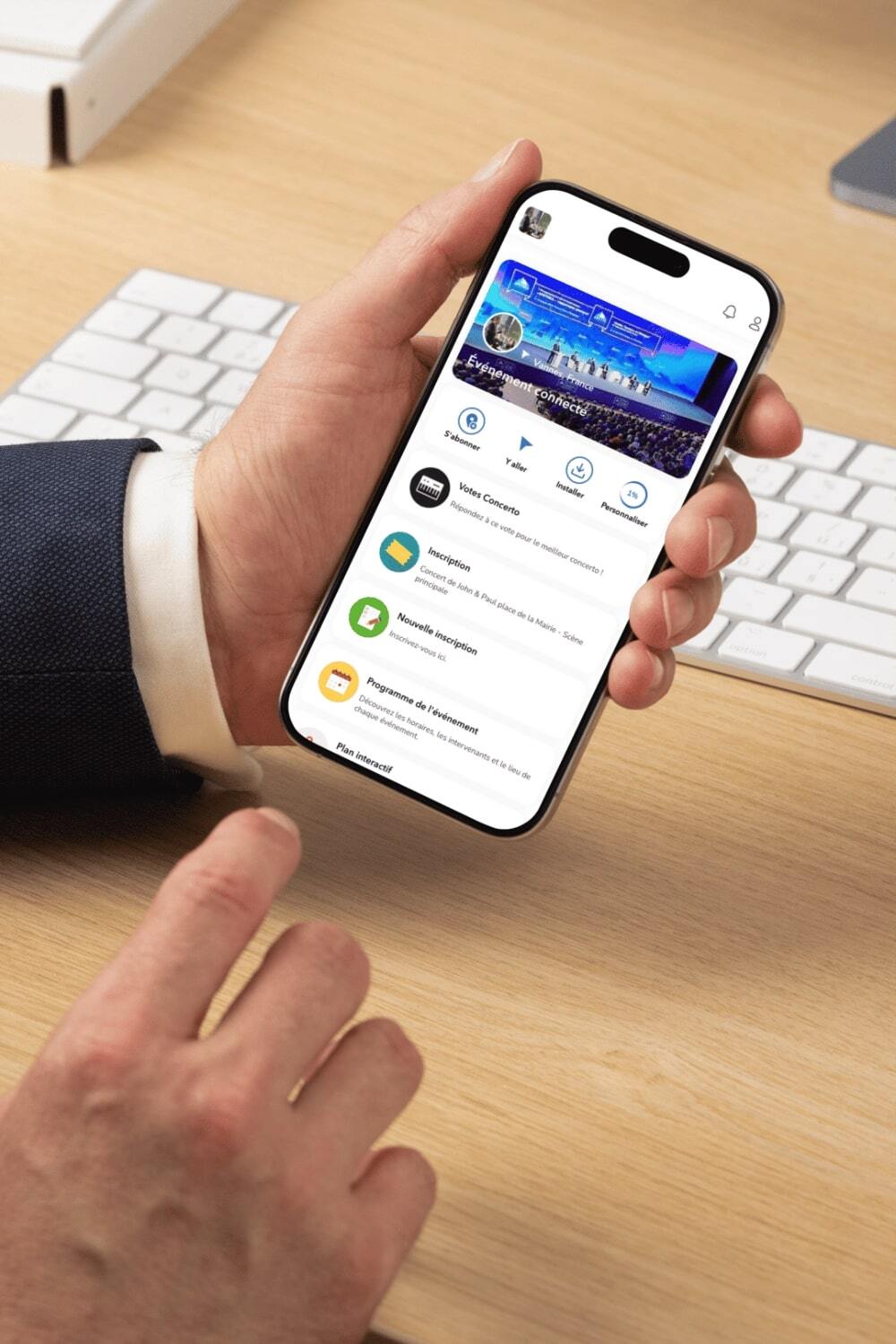
Imagina provides a set of features tailored to collaborative workshops. Without imposing a rigid format, the platform effectively supports the organisation, facilitation and reporting of a workshop.
With Imagina, you can:
- manage participant registration,
- distribute the workshop programme,
- distribute the workshop programme,
- encourage exchanges via the interactive wall,
- gather ideas and feedback using collaborative modules,
- centralise workshop documentation,
- easily share the summary or results.
Whether your workshop involves a small group or a larger audience, the application supports the dynamics of the workshop while remaining easy to use. Imagina's approach is based on clarity, efficiency and active participation, regardless of the nature of the event (training, seminar, conference, professional event, etc.).
Summary table: the workshop in a few points
|
Elements |
Description |
|
Définition |
Collaborative workshop promoting the exchange and generation of ideas |
|
Main objective |
Co-construct, train, solve a problem, brainstorm |
|
Participants |
Internal team, learners, partners, target audience |
|
Role of the facilitator |
Structure discussions, encourage participation, lead to feedback |
|
Duration |
feedbackDurationFrom 1 hour to one day or in multiple sessions |
|
Benefits |
Creativity, cohesion, efficiency, involvement, communication |
|
Use of Imagina |
Interactivity, idea gathering, participant engagement, simplified feedback |
FAQ – Everything you need to know about workshops
1. What is the difference between a workshop and a traditional meeting?
A workshop relies on the active participation of all members, unlike a meeting, which is often more top-down. The goal is to generate ideas, solve a problem or create something together. It is a dynamic, interactive and results-oriented format.
2. How many people can participate in a workshop?
There is no strict limit. Small groups (5 to 15 people) are generally more effective for in-depth work. For larger events, it is possible to divide the audience into sub-groups to maintain a collaborative dynamic.
3. Is a facilitator needed to run a workshop?
Yes, a facilitator is highly recommended. They facilitate discussions, guide the process, regulate speaking time and ensure that the group achieves its objective. This role can be filled by an employee, a trainer or an external speaker.
4. How can Imagina facilitate the organisation of a workshop?
Imagina allows you to structure the workshop, centralise documents, create interactivity (questions, votes, idea wall) and easily collect contributions. This improves participation and makes it easier for organisers to report back.
5. Can the results of a workshop be measured?
Yes. The ideas collected, votes cast, questions asked and documents shared can be used to produce a clear summary. With a platform such as Imagina, this data can be easily retrieved to produce a report or prepare the next stage of the project.


