A roadshow is a marketing strategy that involves travelling from city to city to meet your audience. This approach allows you to showcase a product, service or brand directly in the field, to potential customers, partners and distributors alike.
Unlike a digital campaign or traditional advertising, a roadshow relies on direct contact, real-life experience and live demonstrations. It is a particularly powerful method for capturing attention, creating human connections and triggering immediate engagement.
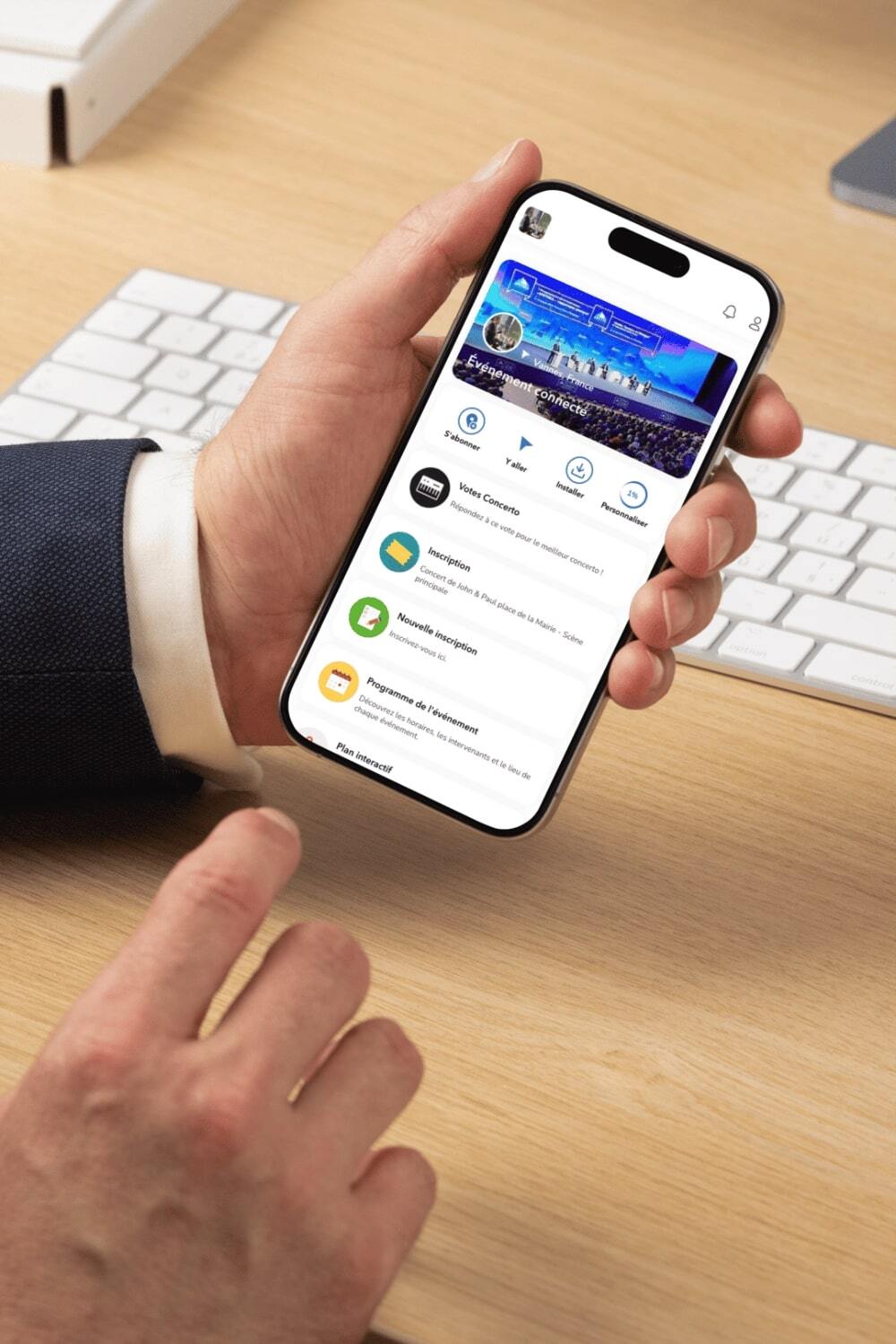
Many companies use it for launches, awareness campaigns or simply to boost their visibility during a key period. With modern event solutions such as Imagina, coordinating, interacting with and monitoring roadshows becomes even more seamless.
1- The roadshow: definition and how it works
2- How to make a roadshow a success?
3- Objectives and benefits of the roadshow
4- Organising a roadshow: the essential steps
6- FAQ: Everything you need to know about the roadshow
The roadshow: definition and how it works
A roadshow is a marketing tour organised in different locations, following a predefined route. The sales or events team travels to conduct a series of activities:
- demonstrations,
- workshops or mini-conferences,
- meetings with customers,
- product presentations,
- street marketing operations.
The aim of each stage is to attract the attention of a target audience, present the main message of the campaign and create a memorable experience.
This format is particularly useful for:
- launching a new product,
- strengthening presence in the field,
- developing awareness of an existing brand,
- supporting sales and distributor relations.
Thanks to the proximity it creates, the roadshow enables sales teams to establish a more authentic and lasting relationship with the prospects they meet.
How to make a roadshow a success?
Preparation is essential for a roadshow to work, and Imagina is here to help. Here are the key elements:
Combine multiple communication channels
Posters, digital content, social media, flyers, press relations... These actions boost the visibility of your tour.
Create opportunities for real interaction
The appeal of a roadshow lies in face-to-face encounters. Your teams must therefore be available to answer questions, explain things and listen.
Play on scarcity
The ‘only on this date and in this city’ aspect creates a sense of urgency and encourages the public to come along.
Analyse feedback at each stage
The comments gathered throughout the tour enable you to adapt your message, activities and strategy.
With a platform such as Imagina, you can also:
- collect feedback via surveys and Q&As,
- centralise the contacts you meet,
- automate certain communications,
- track indicators in real time.
Objectives and benefits of the roadshow
Roadshows offer numerous marketing, commercial and relational advantages:
Strong human contact
Face-to-face exchanges allow for a gentler, more personalised and much more persuasive approach than telephone prospecting.
A direct impact on brand awareness
By increasing the number of meetings, the brand gains visibility, credibility and recognition.
A boost for teams
Getting out of the daily routine and meeting the public motivates sales teams and gives new energy to the campaign.
Stronger customer loyalty
A positive encounter, a convincing demonstration or an immersive experience promotes trust and brand loyalty.
An effect on distributors
The more demand increases during the tour, the more distributors are encouraged to order more stock.
Organising a roadshow: the essential steps
1. Strategic framework
Define the message, the process, the schedule and everyone's roles.
A clear reverse schedule is essential to ensure that the whole team is working towards the same goal.
2. Communication materials
Banners, kakemonos, POS advertising, videos, product sheets, goodies: everything must be consistent and ready to be deployed.
3. Budget
Transport, logistics, staff, catering, equipment, communication...
Every expense must be anticipated to avoid unpleasant surprises.
4. Authorisations and safety
Choice of venues, administrative requests, risk prevention, electrical systems, signage... You can't improvise in the field.
5. Logistics
Set-up, dismantling, travel time, weather, adapting to local constraints...
The more precise the preparation, the smoother the roadshow will be.
6. Monitoring & analysis
After each stage, an assessment must be carried out to measure the impact and optimise the next steps.
Imagina can help centralise data, streamline internal communication and structure the entire reporting process.
Roadshow summary table
|
Element |
Description |
|
Définition |
Promotional tour aimed at presenting a brand or product directly in the field |
|
Objectives |
Awareness, meetings, demonstrations, sales, loyalty |
|
Target audience |
Customers, prospects, distributors, partners |
|
Advantages |
Proximity, engagement, greater persuasion, enhanced visibility |
|
Preparation |
Strategy, logistics, communication, budget, authorisations |
|
Analysis |
Reporting, KPIs, field feedback, debriefings |
|
Imagina |
Interactive tools, opinion gathering, centralisation of contacts, follow-up |
FAQ: Everything you need to know about the roadshow
1. Is a roadshow suitable for all types of businesses?
Yes. Start-ups, SMEs and major brands alike can use roadshows as an excellent way to boost their visibility and meet their audience face-to-face.
2. How long does a roadshow last?
From a few days to several weeks, depending on the size of the tour and the number of cities visited.
3. What budget should be allocated for a roadshow?
The budget depends on the activities, distance, equipment and staff involved. A precise estimate is necessary before launch.
4. Can certain stages be digitised?
Yes. Tools such as Imagina facilitate interactions, collect feedback and centralise data.
5. How can Imagina improve the organisation and monitoring of a roadshow?
Imagina centralises registrations, interactions, field feedback and contacts collected during each stage of the roadshow. The application also allows you to disseminate practical information, send notifications and analyse data to optimise the rest of the tour.


