Workshops have become an essential format in modern organisations. They bring a group together around a common goal: to solve a problem, come up with solutions, move forward with a project or stimulate collective creativity.
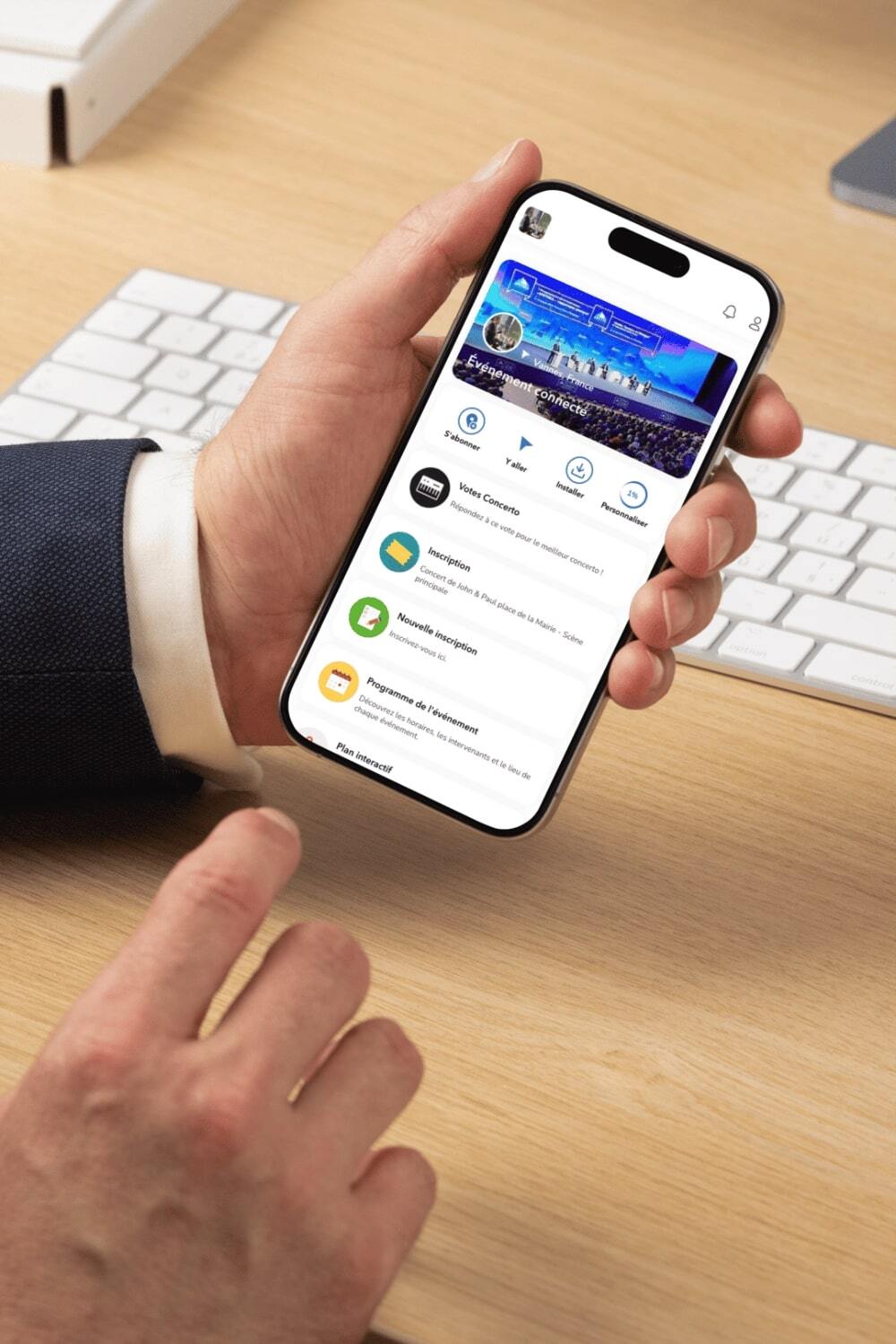
This collaborative format is becoming increasingly popular in companies, associations, institutions and training centres because it harnesses collective intelligence and transforms a traditional meeting into a dynamic, productive and engaging experience. With the help of digital tools such as Imagina, organising and running a workshop becomes even easier.
Workshop: simple and clear definition
A workshop brings together several participants around a single topic in order to:
- reflect together,
- share ideas,
- compare points of view,
- develop a solution,
- move a project forward.
Unlike a more traditional meeting, a workshop focuses on active participation: everyone expresses themselves, contributes and enriches the group. This format encourages creativity, unlocks situations and leads to clear decisions.
Whether it is called a workshop, collaborative workshop or group meeting, it is the same type of event.
Why organise a workshop?
There are many reasons. A workshop can be used to:
Solve a problem
Gathering different points of view often speeds up the search for solutions.
Moving a project forward
Working collectively helps to clarify, structure and prioritise.
Innovating
The workshop format stimulates creativity, new ideas and free thinking.
Training differently
Learning becomes more interactive, fun and participatory.
Strengthen team spirit
Exchanges naturally reinforce cohesion and trust.
Create a climate conducive to dialogue
In a relaxed setting, people feel free to speak their minds and inhibitions fall away.
For these reasons, many organisations incorporate workshops into their working methods, project management or team building.
Who participates in a workshop?
It all depends on the objective. Participants may include:
- a small project team,
- several departments,
- executives or managers,
- external partners,
- learners or students,
- an extended committee.
The key is to bring together the people who are genuinely affected by the subject. The number of participants can vary: 5 to 15 for a creative workshop, or larger groups divided into sub-workshops.
How long does a workshop last?
The duration of a workshop is not fixed: it varies according to the objectives and the desired level of depth. Some workshops are short, generally between 1.5 and 3 hours, which is ideal for brainstorming or quickly pooling ideas. Others last half a day, a very common format that allows for in-depth exploration of a topic while maintaining good group dynamics. It is also possible to organise a full-day workshop when the discussion requires several successive phases. Finally, some projects require regular support: in this case, the workshop takes the form of a cycle of recurring sessions, scheduled weekly or monthly. The frequency depends entirely on the needs, theme and progress of the project.
How to prepare a workshop?
A workshop cannot be improvised. Its success depends on several key steps.
1. Choose the facilitator
They structure the discussions, manage the pace and ensure a good dynamic.
2. Define the objectives
A workshop without clear objectives risks becoming scattered. A single, well-defined direction is often sufficient.
3. Identify the participants
Selecting the right people helps to avoid workshops that are too crowded or poorly targeted.
4. Prepare the materials
Whiteboard, post-it notes, presentation, quiz, documents, interactive tools...
With a platform such as Imagina, certain steps can be digitised (surveys, Q&A, idea wall, etc.).
5. Plan the event
Date, time, location, invitations, duration: everything must be thought out in advance.
A good workshop relies above all on careful preparation.
Organise a workshop with Imagina
The Imagina platform facilitates the running of workshops thanks to its integrated collaborative tools. It allows you to:
- manage registrations,
- distribute the programme,
- launch live polls,
- collect ideas via an interactive wall,
- share documents,
- analyse interactions in real time,
- send summaries or reports.
The application makes workshops more participatory and streamlines the entire process, from launch to feedback.
Summary table
|
Element |
Description |
|
Definition |
Collaborative workshop for brainstorming, creating or solving a problem |
|
Objectives |
Co-construction, innovation, training, problem solving |
|
Participants |
Team, department, partners, wider audience |
|
Facilitator |
Responsible for facilitating discussion and interaction |
|
Duration |
From 1 hour to several sessions |
|
Benefits |
Creativity, cohesion, efficiency, communication |
|
Imagina's contribution |
Interactive tools, idea gathering, follow-up, feedback |
FAQ – Workshop
1. What is the difference between a workshop and a traditional meeting?
A workshop is based on active participation and co-construction, whereas a meeting is more top-down.
2. How many people should be invited to a workshop?
Between 5 and 15 participants for an effective workshop; beyond that, it is advisable to create sub-groups.
3. Do you need a facilitator?
Yes, a facilitator is essential to guide the discussion and maintain momentum.
4. Can Imagina help facilitate a workshop?
Yes. Imagina offers interactive tools and a centralised space to organise, energise and analyse the workshop.
5. How can I measure the impact of a workshop?
Through the ideas gathered, surveys, votes and feedback, analysed directly from your platform.
6. Can a workshop be completely digitised using Imagina?
Yes, Imagina allows you to manage registration, interactions, facilitation and reporting within a single space.
7. Does Imagina improve participation during a workshop?
Yes. Interactive modules (polls, Q&A, idea wall) encourage participant engagement.


