In a company, internal communication is often something we overlook… until we painfully feel its absence. Lack of information, tensions between teams, misunderstandings around decisions that have been made… What if all of this simply came down to a communication issue? Very often, it does.
For Human Resources teams, internal HR communication has become a real strategic priority. And for good reason: it affects everything that makes a company thrive from within employee engagement, team cohesion, well-being at work, retention… Nothing less than that.
So here are 8 best practices to (re)energize your internal communication, by relying on the right levers, the right tools, and a clear vision. Along the way, we’ll also share some concrete examples inspired by modern solutions such as those offered by Imagina, a French company that is transforming digital internal communication.
1- Define what you really want to say (and to whom)
2- Take stock of the tools you use (and the ones you’re stuck with)
3- Establish real consistency in your messaging
4- Encourage upward communication (not just top-down)
5- Work on transparency… and truly embody it
6- Involve managers : the true relays of HR communication
7- Take care of onboarding as a showcase of your culture
1. Define what you really want to say (and to whom)
Improving your communication starts with a simple realization: what do you want to say, to whom, and why? Many companies communicate a lot… without actually conveying anything meaningful.
So take a moment to lay the foundations: what are your key messages? Who are your internal audiences (field teams, office staff, managers, new hires)? And above all, what tone should you adopt? The goal isn’t to sound “corporate” at all costs, but to communicate honestly, with authenticity.
2. Take stock of the tools you use (and the ones you’re stuck with)
Have you ever stopped to think about how many communication channels are used in your company? Between emails, meetings, intranet platforms, WhatsApp messages, internal social networks… it can quickly turn into a real mess.
Here’s an overview of the most common tools, along with their strengths and weaknesses:
| Channel |
Advantages |
Limitations |
|---|---|---|
|
Company intranet |
Centralized, well-structured |
Not very engaging if poorly managed |
|
Internal social networks |
Dynamic, encourages interaction |
Can lead to distraction |
|
Emails |
Fast, universal |
Too many, often ignored |
|
Meetings |
Human, enable direct dialogue |
Time-consuming, ineffective without a clear framework |
|
Mobile app (e.g. Imagina) |
Modern, intuitive, accessible even without a computer |
Requires some initial onboarding |
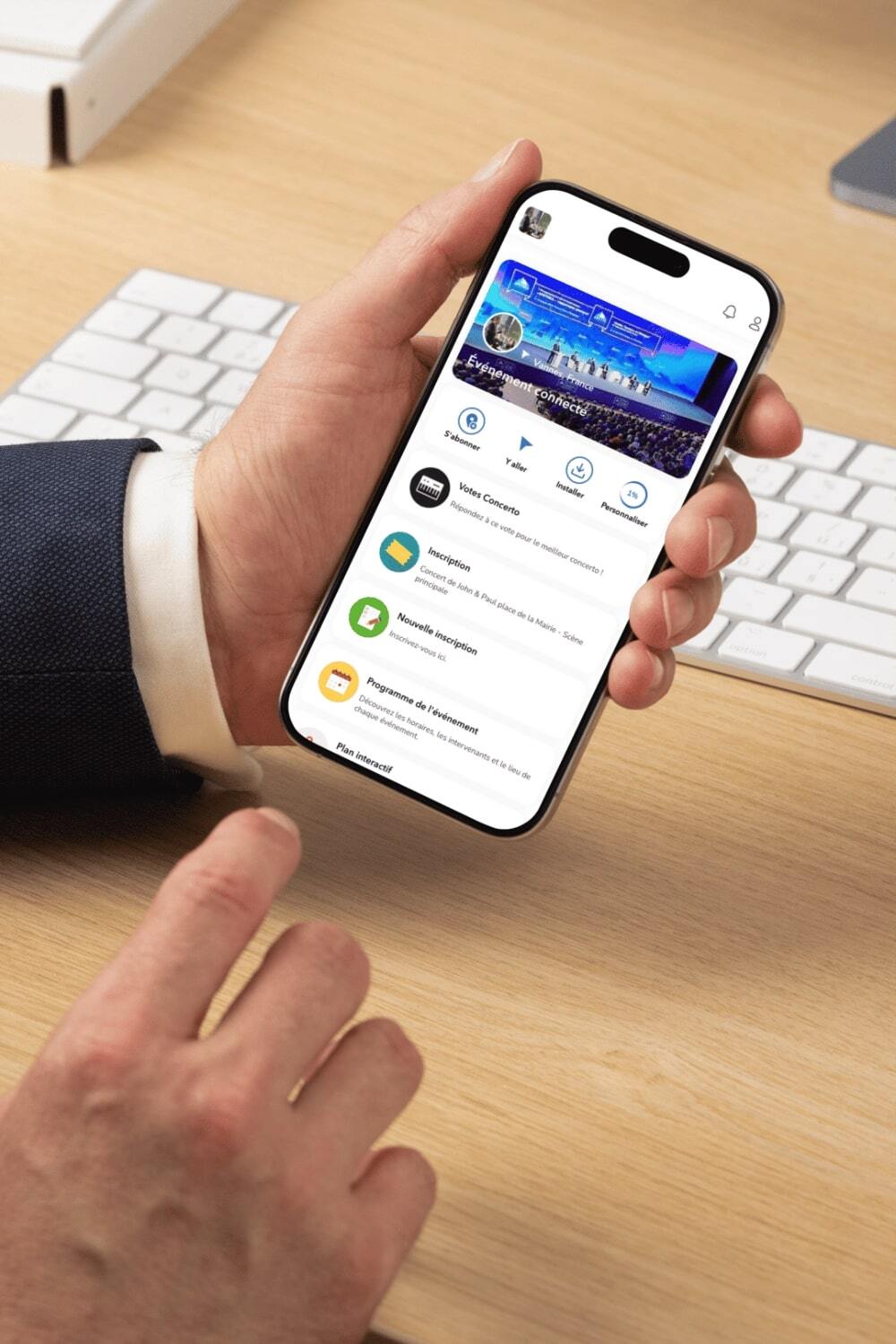
Companies like Imagina have clearly understood this: centralizing information within a single app helps simplify communication, avoid information overload, and reach all employees even those without a fixed workstation.

3. Establish real consistency in your messaging
You know what tires teams out the most? Information that comes in dribs and drabs. One HR message here, a business update there, a quarterly newsletter that everyone forgets… What’s needed is to create regular touchpoints and expected formats.
Some companies run a “weekly briefing” every Monday morning, others choose a monthly video from the CEO, or a short update every Friday via the internal app. The idea is to build a communication rhythm that’s consistent, predictable and almost reassuring.
And above all, don’t be afraid to vary the formats: a message can work just as well as an animated visual, a 3-minute podcast, or even an interactive story on an app like Imagina’s.
4. Encourage upward communication (not just top-down)
Too many companies still operate in a “management speaks, employees listen” mode. That model is outdated. Effective HR communication is two-way: yes, you inform but you also listen. Truly.
And simply saying “our doors are always open” isn’t enough to make employees feel comfortable speaking up. You need to actively create the conditions for listening:
- Anonymous micro-surveys
- Idea or suggestion spaces
- Direct internal messaging with HR
- Internal ambassadors trained to relay feedback
Modern tools make this possible by integrating fast, discreet feedback systems ideal for capturing on-the-ground sentiment without complexity. And that kind of insight is pure gold when it comes to adjusting HR actions in real time.
5. Work on transparency… and truly embody it
Internal transparency doesn’t mean sharing every company figure without context. Above all, it means being able to explain decisions, own up to mistakes, and give meaning to actions.
When leadership explains why a change is being introduced, how teams will be involved, and what it means for each employee, things are far more easily accepted even difficult decisions.
And this can be done with simple tools: videos, internal FAQs, group discussions, perception surveys… What matters most is adopting a clear, consistent posture and standing by it.

6. Involve managers : the true relays of HR communication
HR teams can’t do everything on their own. Front-line managers play a key role: they are the ones employees listen to, question, and follow. If managers are poorly informed or uncomfortable with the messages they need to convey, the whole structure falls apart.
That’s why it’s essential to:
- Train them in managerial communication
- Share information with them in advance
- Involve them in the communication strategy
- Highlight and value their role in the employee experience
A well-trained, well-equipped manager becomes a powerful ally of HR communication. And this role needs to be developed and supported over time.
7. Take care of onboarding as a showcase of your culture
A new employee’s arrival is a key moment. And yet, how many companies get it wrong? Poor information, unclear introductions, missing tools, total confusion…
A failed onboarding experience leads to employees who doubt, disengage or even leave quickly. On the other hand, a well-designed onboarding process digital journeys, interactive welcome guides, team introduction videos encourages engagement from day one.
Some solutions, like Imagina, make it possible to create fully customized digital onboarding experiences, accessible even before the first day at work. The result? A reassured, engaged, and aligned employee.
8. Measure, adjust, repeat
We’ll end with a point that’s often overlooked: measuring the effectiveness of internal communication. Because without indicators, you’re navigating blindly.
Read rates, survey participation, interactions, qualitative feedback… all of these are valuable data points. And with the right tools, you can track them effortlessly and, most importantly, act on them.
Dashboards like those offered by Imagina make it possible to monitor trends, identify “blind spots” (less-informed teams), and continuously refine your communication strategy.
In summary
Internal communication isn’t a “nice-to-have.” It’s a strategic HR lever that directly influences motivation, team cohesion, performance and even employee retention. With the right tools like Imagina, the right best practices, and an authentic approach, you can truly transform your company culture from the inside out.
FAQ
Why is internal communication crucial for HR?
Because it structures the relationship between employees and the company, strengthens trust, and fosters engagement.
How do you choose the right internal communication tools?
Based on your audience, your objectives, and the user experience. A solution like Imagina offers a centralized, mobile, and intuitive approach.
How can employees be involved in internal communication?
By creating spaces for expression, participative formats, and by valuing their feedback in HR actions
What is the ideal communication frequency?
Rather than aiming for a rigid frequency, focus on consistency and adapting to the company’s rhythm.
How does good internal communication impact employer branding?
It reflects the values experienced on a daily basis. A well-informed and listened-to employee becomes your best ambassador.


